Recently Sprained or Strained Something? Glen Rock’s PT Experts Can Help You Heal Faster.
You’re walking through a quiet Glen Rock neighborhood or stepping off a curb near Rock Road when suddenly your foot lands the wrong way. Instant pain. A twist, a stumble, maybe even a fall. Now what?
Sprains and strains are incredibly common — but knowing when to rest and when to seek treatment isn’t always easy. And waiting too long can lead to stiffness, instability, or chronic pain.
At
Lisa Johnson Pelvic & Orthopedic Physical Therapy in Glen Rock, New Jersey, we evaluate your injury, explain what’s going on, and help you recover safely and efficiently so you can get back to life without lingering pain.
Sprain or Strain: What’s the Difference?
This is one of the most frequent questions we hear, especially after ankle mishaps.
Before defining each injury, it helps to understand two important structures:
- Ligaments connect bone to bone
- Tendons connect muscle to bone
Sprains = Injured Ligaments
A sprain happens when a ligament is overstretched or torn. This usually affects joints such as:
- Ankles
- Knees
- Wrists
- Elbows
Most sprains don’t cause the joint to dislocate — but symptoms can range from mild soreness to significant swelling and difficulty walking. Severe sprains occasionally require surgical repair, but most heal well with proper physical therapy.
Strains = Injured Muscles or Tendons
Strains occur when a muscle or tendon is overstretched or partially torn. There are two types:
Acute strains: Happen suddenly — slipping on ice, misstepping on uneven ground, lifting something too quickly
Chronic strains: Result from repetitive motion — common in athletes, runners, tennis players, and people who perform repeated movements at work
Hamstring strains, low-back strains, and shoulder strains are especially common.
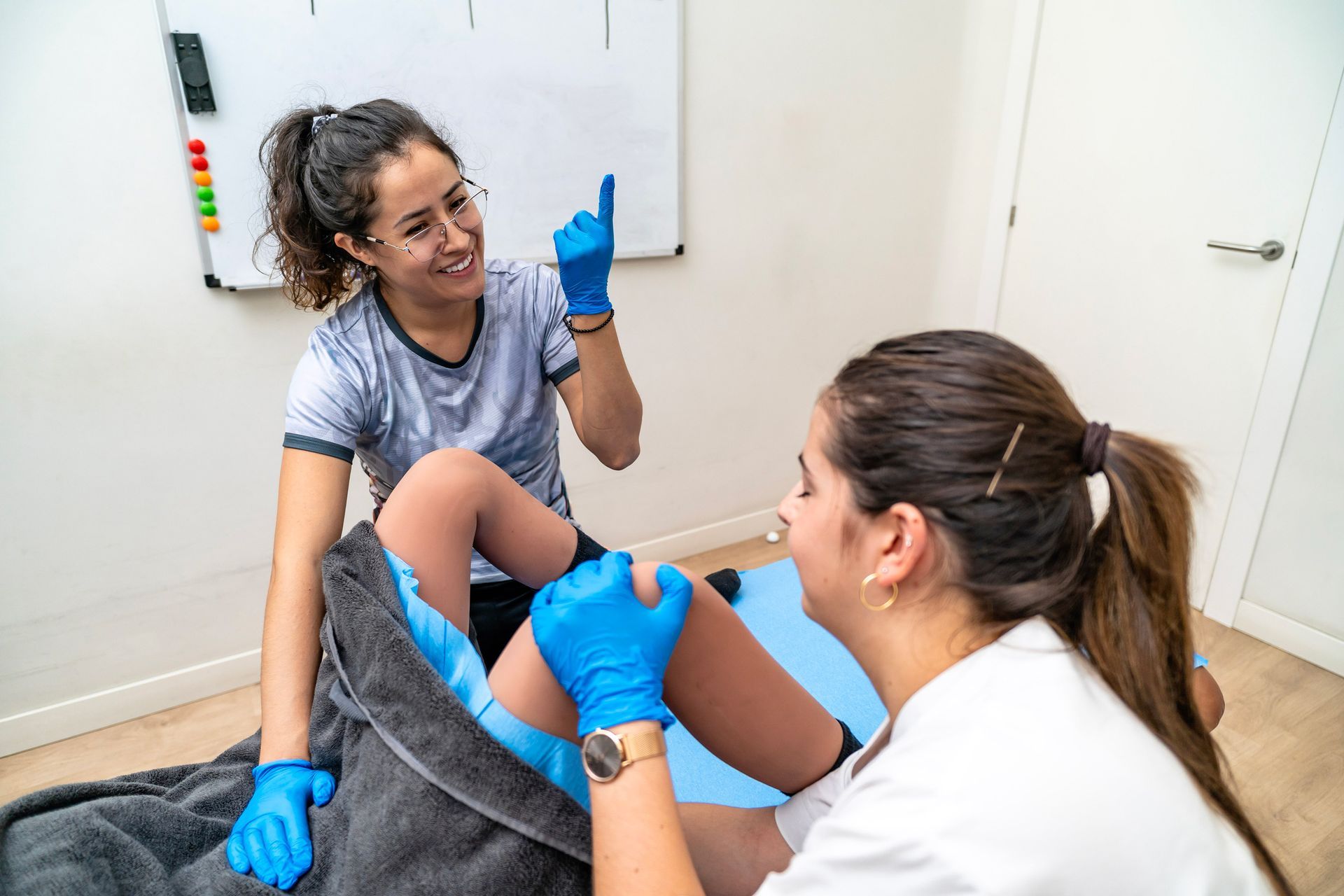
How Physical Therapy Helps a Sprain or Strain Heal Properly
Working with a physical therapist after a sprain or strain can significantly speed up healing — but PT also helps ensure that the injury
doesn’t return.
At our Glen Rock clinic, we guide you through three primary phases of recovery:
1. Early Phase: Calm the Pain and Swelling
During this initial stage, the goal is comfort, protection, and reducing inflammation.
Your therapist may use:
- Ice or heat
- Gentle manual therapy
- Soft tissue mobilization
- TENS
- Light stretching
- Supportive taping or bracing
- Education on activity modification
We’ll also teach you safe early movements so the injured area doesn’t stiffen.
2. Middle Phase: Restore Mobility and Function
Once your pain begins to decrease, we start carefully rebuilding movement in the injured joint or muscle.
This phase may include:
- Restoring full range of motion
- Improving joint mobility
- Releasing tight tissues
- Beginning controlled strengthening
- Correcting faulty movement patterns
You and your therapist work together to make sure healing is happening in the right direction — not just “feeling better for now.”
3. Final Phase: Strengthen, Stabilize, and Prevent Future Injury
Once the sprain or strain has healed, therapy shifts toward long-term protection.
Your plan may include:
- Balance and stability training
- Strengthening the surrounding muscles
- Improving flexibility
- Teaching safe mechanics for walking, running, or daily activities
- Return-to-sport guidance, if applicable
If you’ve sprained or strained something once, you’re more likely to do it again without proper rehab. That’s why this phase is so important.
Common Symptoms of Sprains and Strains
While only a professional evaluation can give you a definite diagnosis, typical symptoms include:
Sprain Symptoms
- Swelling
- Bruising
- Pain with weight-bearing
- Tenderness around the joint
- A “pop” at the moment of injury
Strain Symptoms
- Muscle spasms
- Pain when contracting or stretching the muscle
- Swelling
- Difficulty moving the affected limb
If you’re experiencing these — especially if the pain is lingering — a physical therapy evaluation is one of the best next steps.
Do You Need Physical Therapy?
According to MedlinePlus, the first step after a sprain or strain often includes RICE:
- Rest
- Ice
- Compression
- Elevation
But if your symptoms persist, worsen, or interfere with walking, sleeping, or daily activities, it’s time to see a professional.
At
Lisa Johnson Pelvic & Orthopedic PT, we evaluate:
- The joint or muscle’s range of motion
- Strength and stability
- Gait mechanics
- Balance
- Any compensations from the injury
- Your history of previous injuries
Then we create a personalized plan to help you heal fully — not just temporarily.
Get Back on Your Feet With the Right Help
Sprains and strains don’t always heal well on their own. Without proper guidance, people often end up with weakened tissue, decreased stability, or a higher risk of reinjury.
You deserve a full recovery — not a lingering issue.
Contact Lisa Johnson Pelvic & Orthopedic Physical Therapy in Glen Rock today to schedule an evaluation and start moving comfortably again.